

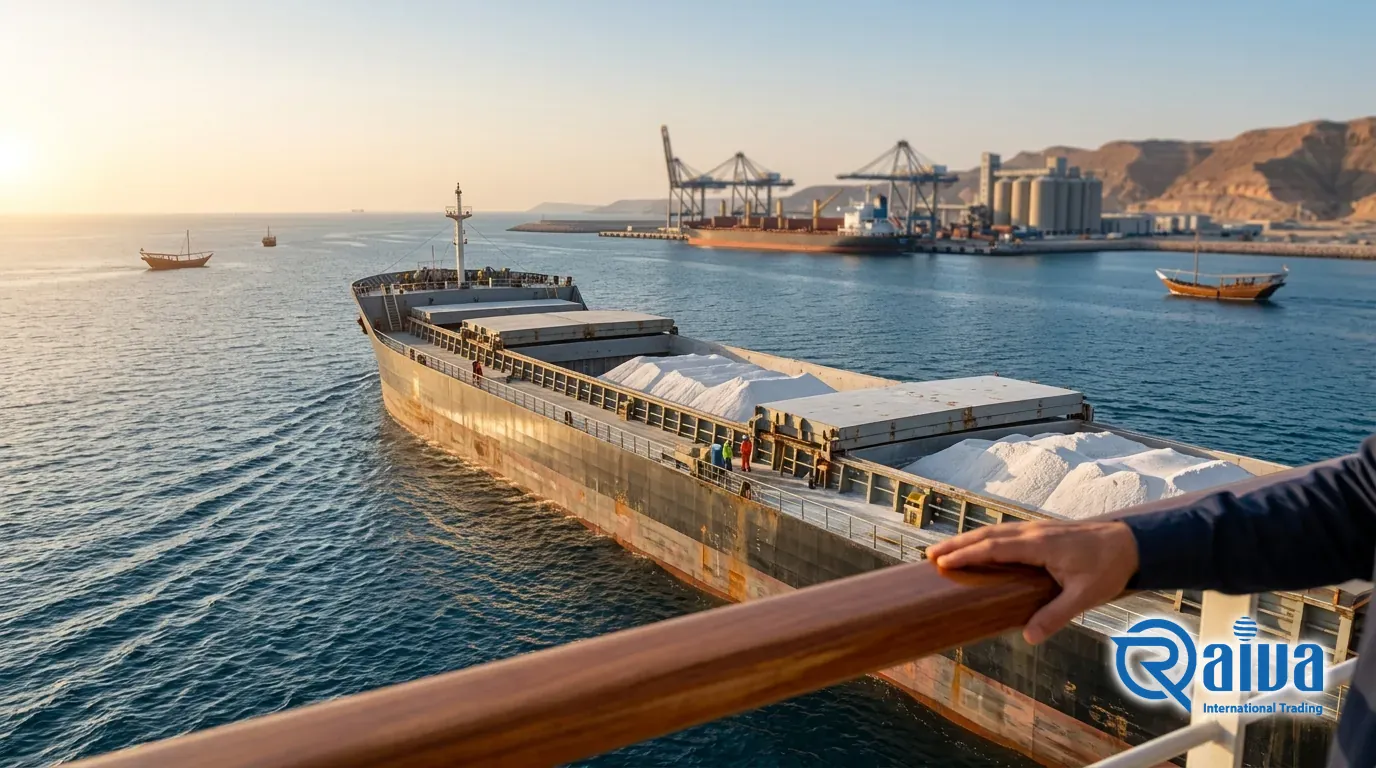
Raw gypsum: cement plants buy SO₃, not purity
A cement plant adds 3–5% gypsum to control the hydration of C₃A, so what it needs is enough SO₃, delivered consistently. Higher purity is worth paying for only when the gypsum will be calcined into plaster or used as a white filler.
| Grade | CaSO₄·2H₂O | Typical use |
|---|---|---|
| Cement grade | 88–92% | Set retarder, agricultural gypsum; SO₃ 42.8–46.3% |
| High Quality 95 | 95.0% | Plaster calcination, board |
| Super White 98 | 98.0% | Plaster, filler, plasterboard |
| Premium 99 | 99.0% | Highest analysed purity; SO₃ 45.64% |
Purity in a natural deposit shifts with the working face and with each blast, so a current sample analysis is issued for every consignment rather than a standing certificate; three mine-face certificates are published side by side on the product page so you can see the real spread. Standard size is 0–50 mm lump, analysed to ASTM C471-M-20.
Product specification Raw gypsum rock: 88% cement grade to 99% premium white Four grades, three mine-face certificates side by side, sizing and terms.Gypsum plaster for boards and finishes
Calcined at roughly 150–180 °C, gypsum becomes hemihydrate plaster that sets again with water. Two grades cover base coat and finish:
| Property | 100 mesh (base coat) | 200 mesh (finish) |
|---|---|---|
| Purity | 94% (spec > 90) | 95% (spec > 90) |
| Whiteness | 88% | 95.5% |
| Initial / final set | 7 / 15 min | 7 / 16 min |
| Compressive strength, 2 h | 6.21 N/mm² | 7.5 N/mm² |
| Flexural strength, 2 h | 2.50 N/mm² | 2.7 N/mm² |
| Water / stucco ratio | 75% | 83% |
Portland cement for Gulf construction
Two ISIRI 389 cements cover most building work; the choice turns on whether the concrete meets sulfate-bearing ground.
| Property | Type I-425 | Type II |
|---|---|---|
| C₃A | 7.2% | 6.4% (max 8) |
| Sulfate resistance | Normal | Moderate |
| 28-day compressive strength | 440 kg/cm² (min 425) | 450 kg/cm² (min 315) |
| Blaine fineness | 3260 cm²/g | 3100 cm²/g |
| Initial / final set | 140 min / 3 h | 140 min / 3 h |
| Typical use | Structural concrete, precast | Foundations in sulfate-bearing ground, mass pours |
API Class G, with C₃A at 1.90%, is an oil-well cement tested to API Spec 10A — not a construction cement. For severe sulfate exposure in building work, Type V can be sourced on request. Use cement within three months of production for full rated strength, and store it dry, off the ground and away from walls.
Buyer's guide Sulfate-resistant cement and clinker for Iraq and the GCC Why C₃A decides sulfate resistance, and where Type II and Type V fit.Shipping to the UAE, Qatar and Kuwait
The loading ports face the Gulf states across a short stretch of water:
- Terms: FOB Bandar Abbas or Bandar Imam Khomeini, with CFR and CIF to most Gulf ports; overland by truck where the route suits.
- Gypsum rock: bulk or 1–1.5 MT jumbo bags.
- Plaster: 25 kg 3-ply laminated PP bags, palletized and shrink-wrapped; jumbo bags and bulk tanker for board plants; PE lining on request.
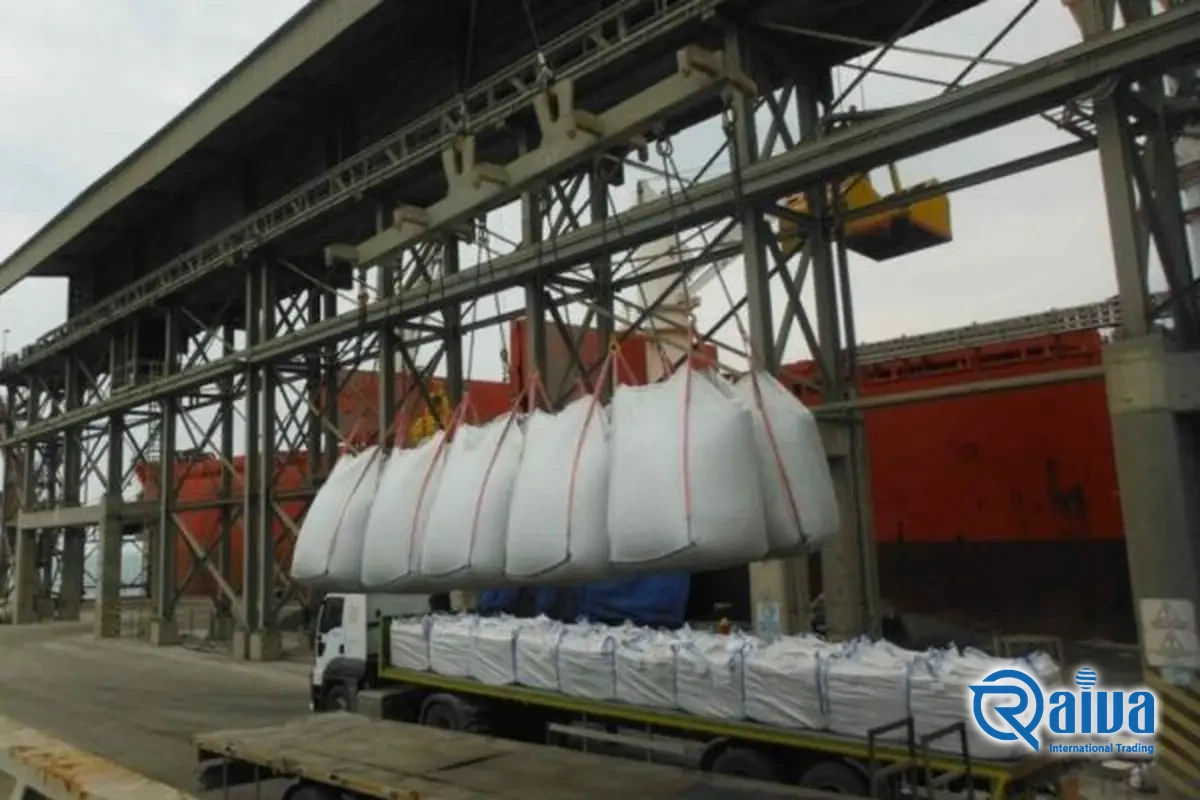
- Cement: 30 × 50 kg bags inside a jumbo bag for fast loading and discharge, 1.5 MT jumbo bags, or bulk vessel above 25,000 MT.
| Item | Terms |
|---|---|
| Minimum order | 1 × 20 ft container (approx. 25 MT) bagged; 500 MT for a bulk vessel (gypsum rock, cement); trial quantities |
| Lead time | 7–14 days for standard grades after order confirmation |
| Certification | Gypsum: current sample analysis per consignment. Cement: batch mill certificate. SGS or Bureau Veritas at the buyer's cost |
| HS code (6-digit) | Gypsum 2520.10; plaster 2520.20; Portland cement 2523.29 — national subheadings vary |