

Cement Clinker Supplier & Exporter — Grey, Sulfate-Resisting and White
C₃S 50 – 75% Portland Cement Clinker · Grey Types I/II and V, and White
Bulk Portland cement clinker for grinding plants, bagging terminals and blended-cement producers, in three chemistries off different kiln lines — general-purpose grey for Types I and II, sulfate-resisting clinker holding C₃A to 5% for Type V, and white clinker with iron pulled below 0.4% for architectural cement. Every vessel ships against a batch mill certificate.
 LSF 92 – 98
Supply capability at a glance
92 – 98
Lime saturation factor, grey
max 5%
C₃A — sulfate-resisting
max 0.4%
Fe₂O₃ — white clinker
Per batch
Mill test certificate
Physical Properties
Product
Portland Cement Clinker
HS Code
2523.10
Types
I / II, V (SR), White
Free CaO
max 1.0 – 1.5%
Alkalis (Na₂O eq)
max 0.6 – 0.8%
L.O.I
0.5 – 1.5%
Synonyms: Portland Clinker, Cement Clinker, Grey Clinker, White Clinker, OPC Clinker · Sintered nodules from the kiln, ground with gypsum to make cement.
Six-digit WCO heading — national subheadings vary by destination.
Grades & Chemical Analysis
Three clinker chemistries, each cut for a different cement. The grey clinker is the general-purpose feed for Types I and II; the sulfate-resisting grade trades alumina for iron to suppress C₃A; and the white grade is defined by how little iron, manganese and chromium it carries. Select a grade to view its typical range.
Grey Clinker — General-purpose feed for Types I and II
Grey Clinker — Type I & II
- CaO
- 63 – 67%
- SiO₂
- 20 – 23%
- Al₂O₃
- 4.5 – 6.5%
- Fe₂O₃
- 2.5 – 4.5%
- MgO
- max 5 – 6%
- SO₃
- max 2.5 – 3.5%
- Free CaO
- max 1.5%
- Alkalis (Na₂O eq)
- max 0.6 – 0.8%
- L.O.I
- 0.5 – 1.5%
- LSF
- 92 – 98
- Silica Modulus (SM)
- 2.3 – 2.7
- Alumina Modulus (AM)
- 1.3 – 1.7
These are typical production ranges for the kiln lines we ship from, not the result of a single certificate — clinker chemistry moves within a band from run to run. The SO₃ figures are for raw clinker before gypsum is interground. Whiteness is Tri-Y reflectance. A batch mill certificate with the actual oxide analysis is issued for every shipment.
Clinker — Bogue Phase Composition by Type
The four clinker minerals calculated by the Bogue equations, which is how a grinding plant reads a clinker before it buys it. C₃S drives early strength, C₂S the late strength, and C₃A is what sulfate attack feeds on — which is the whole reason Type V exists.
| Phase | Grey — Type I / II | Type V (SR) | White |
|---|---|---|---|
| C₃S (Alite) | 50 – 60% | 45 – 55% | 65 – 75% |
| C₂S (Belite) | 15 – 22% | 20 – 28% | 10 – 20% |
| C₃A (Aluminate) | 6 – 10% | max 5% | — |
| C₄AF (Ferrite) | 8 – 12% | 10 – 13% | < 0.5% |
Grey clinker destined for Type II cement is held to a maximum of 8% C₃A rather than the full 10% band. Type V carries the additional ASTM condition C₄AF + 2×C₃A ≤ 25%. A dash marks a phase the white clinker specification does not fix — with iron capped below 0.4% there is almost no ferrite to form, so the aluminate is governed by the alumina figure instead.
Bespoke Production
Need a tighter band than the ranges above?
If none of the grades above matches your target chemistry, fineness, or packaging, tell us your requirements — we produce custom grades to your exact specification.
Applications
Clinker is not an end product — it is bought by whoever does the grinding. Which of the three grades suits depends entirely on the cement coming out the other side.
Cement Grinding Plants
Imported clinker interground with gypsum to produce finished cement locally.
Sulfate-Resisting Cement
Type V clinker for foundations, sewerage and marine work in aggressive ground.
White & Architectural Cement
Low-iron white clinker for facade panels, terrazzo, tile adhesive and coloured cement.
Blended Cements
Clinker blended with slag, pozzolan or limestone to cut clinker factor and CO₂.
Precast & Ready-Mix
Consistent clinker chemistry for producers who need repeatable set and strength.
Import & Bagging Terminals
Bulk vessel discharge into terminal silos for regional grinding and bagging.
Product Gallery
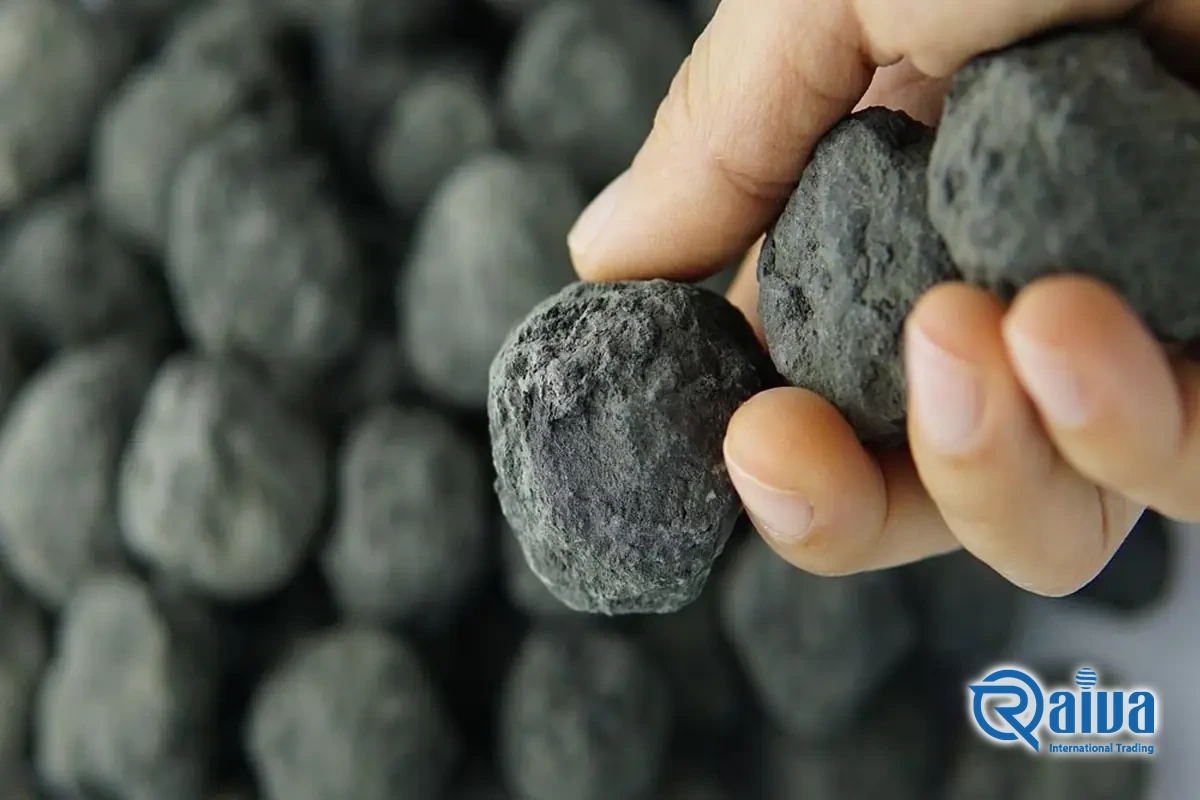
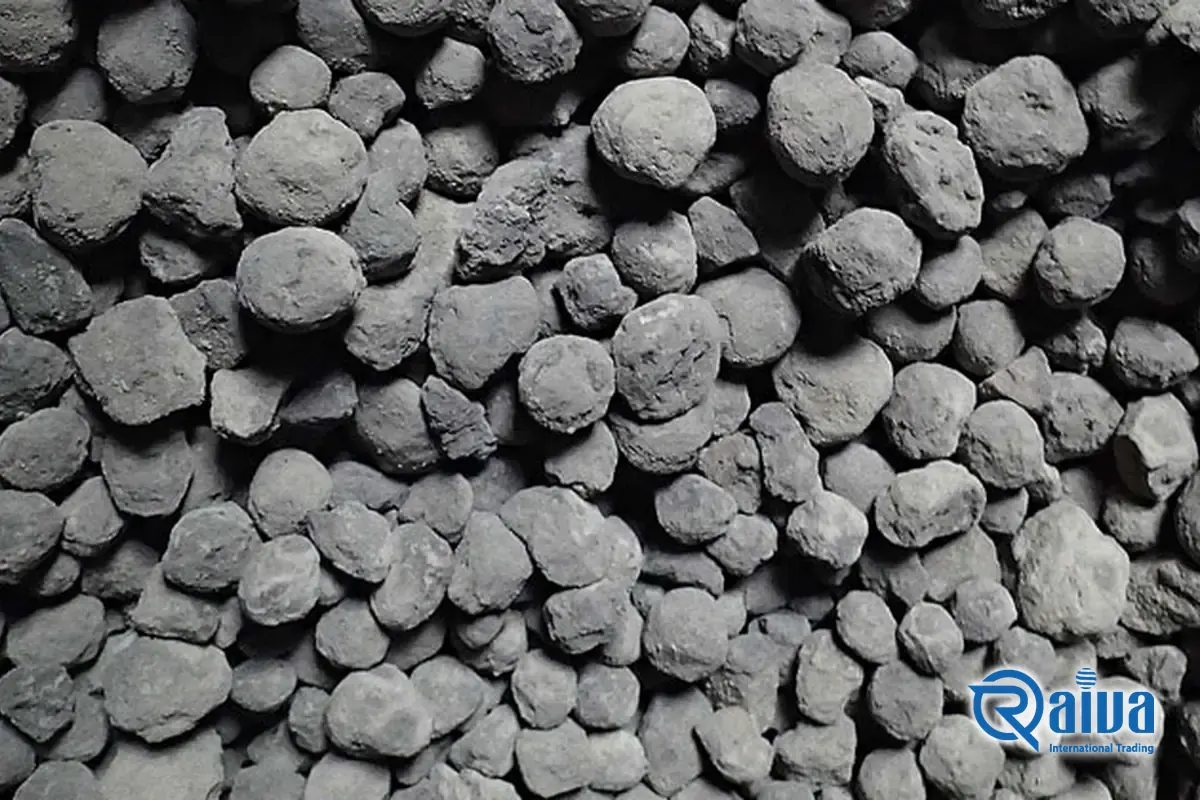
Material as it is stored, graded and loaded for export.
Packaging, Logistics & Trading Terms
How we load, certify and ship clinker. Terms can be adapted by agreement — tell us the vessel size and discharge port and we will work back from there.
- Minimum Order Quantity
- 500 MT minimum for bulk vessel, which is how clinker normally moves. 1 × 20 ft container (approx. 25 MT) in jumbo bags for trial and qualification quantities.
- Packaging
- Bulk vessel loading as standard. 1–1.5 MT woven jumbo bags for container shipment, with a moisture-barrier liner on request.
- Incoterms & Loading Ports
- EXW, FOB, CFR and CIF (Incoterms® 2020) by sea, with standard loading at Bandar Abbas and Bandar Imam Khomeini; other ports by arrangement. DAP and FCA overland, by truck and rail through Iran’s land borders.
- Quality Certification
- Batch mill certificate with every shipment covering the full oxide analysis, calculated Bogue phases and free lime. SGS / Bureau Veritas inspection at buyer’s cost.
- Lead Time
- 7–14 days for standard grades after order confirmation; 15–25 days for custom-milled or specially packed material.
- Storage & Handling
- Clinker is far less moisture-sensitive than ground cement, but it is not inert: prolonged exposure pre-hydrates the alite surface and free lime slakes, both of which cost strength once the material is ground. Keep it covered, keep it off wet ground, and grind it in rotation.
Certificate of Analysis
A batch-specific CoA is issued with every shipment. Third-party inspection by SGS, Bureau Veritas or an inspector of your choice can be arranged at the buyer’s cost.
Ready to quote
Send us your grade, tonnage, destination port and packaging and we will return a firm FOB/CFR/CIF price with lead time.
Request a Clinker Quote