

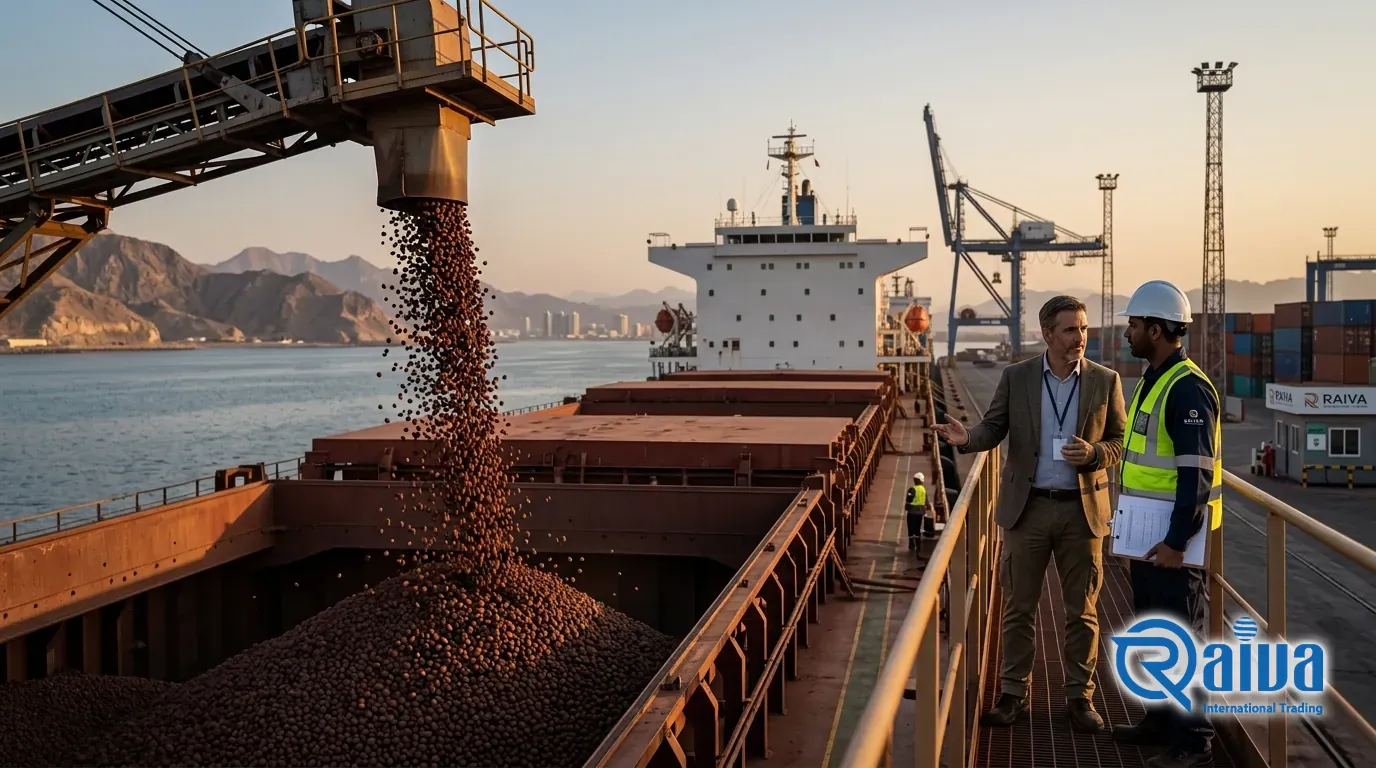
Ore, concentrate or pellet: three different purchases
Supplier lists often blur these three, and the price, the furnace and the contract all depend on which one is on offer:
- Ore is the mined material, crushed and screened. Ours is magnetite at Fe(T) 50 ± 1% in a 0–10 mm cut — a sinter and pellet-plant feed, not a direct charge for a DRI shaft.
- Concentrate is ore upgraded, usually by magnetic separation, to a higher iron grade with less gangue. It is made to order against a tonnage, not held in stock.
- Pellets are concentrate rolled into balls and indurated, so they can go straight into a blast furnace or a direct reduction shaft.
If an offer quotes a concentrate or pellet price for 50% Fe material, ask which of the three it is before comparing it with anything else.
The magnetite specification, with its reject limits
A tonnage contract is negotiated on two columns, not one: the range the cargo is sold against and the threshold at which the buyer may refuse it. Ours publishes both.
| Element | Contract range | Reject limit |
|---|---|---|
| Fe (total) | 50 ± 1% | < 48% |
| FeO | > 14% | < 10% |
| SiO₂ | < 8% | > 15% |
| Al₂O₃ | < 2% | > 6% |
| P₂O₅ | < 0.5% | > 0.9% |
| SO₃ | < 0.5% | > 1.2% |
| TiO₂ | < 0.9% | > 1.5% |
| CaO | < 5% | > 15% |
| Size | 0–10 mm | — |
Ferrous iron above 14% is what identifies the ore as magnetite rather than haematite, and it is why the ore responds to magnetic separation — the step that turns it into a concentrate. Moisture on the certificate is 0% because chemistry is reported on the dried sample; cargo moisture is set by draft survey at the load port and the invoice weight is adjusted against it.
Product specification Iron ore: Fe(T) 50% magnetite, lump and fines Contract range and reject limit for every element, sizing, moisture and trading terms.What a pellet certificate should show
Our pellet specification is issued on request rather than published, so the useful thing to set out here is what to ask for. A pellet is judged on chemistry and on how it survives handling and the furnace:
- Fe total and gangue. SiO₂ plus Al₂O₃ sets the slag volume in a blast furnace and the energy cost in a DRI shaft, where gangue is not removed at all.
- Phosphorus and sulphur. Phosphorus embrittles steel and passes through the furnace into the metal; sulphur has to be removed in the ladle.
- Cold compression strength (ISO 4700) and tumble and abrasion indices (ISO 3271). Weak pellets break into fines between the ship, the stockpile and the furnace top.
- Reducibility (ISO 4695) for DRI plants, and the size distribution of the cargo as loaded.
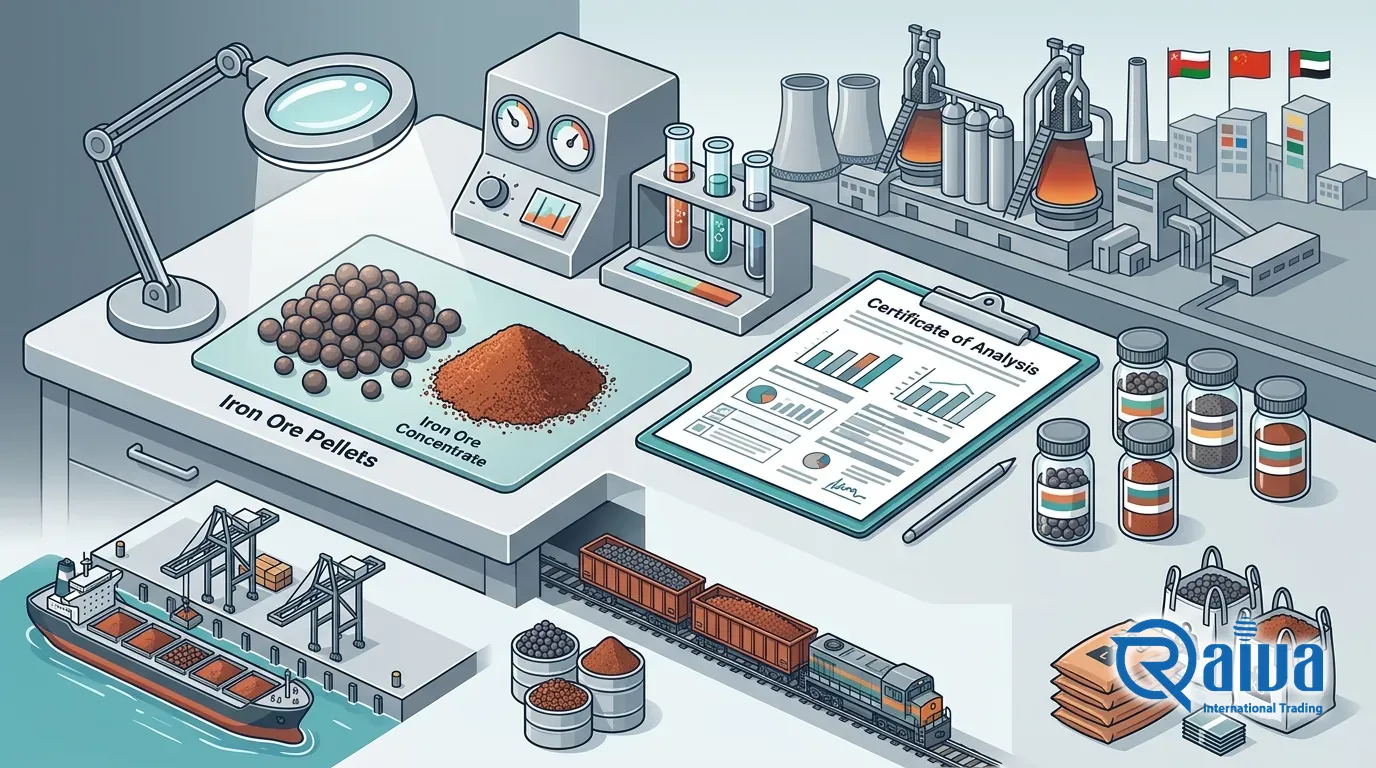
Shipping to Oman, China and the GCC
The loading ports sit on the Strait of Hormuz, opposite Oman, which keeps the sea leg to Gulf mills short:
- Oman and the GCC: bulk vessel FOB, CFR or CIF from Bandar Abbas or Bandar Imam Khomeini; other ports by arrangement.
- China: bulk carrier on the same terms, with draft survey and independent sampling at the load port.
- Neighbouring countries: DAP or FCA overland by truck and rail through Iran's land borders.
| Item | Terms |
|---|---|
| Minimum order | 500 MT for a bulk vessel; container shipments in jumbo bags by arrangement for trial quantities |
| Packaging | Bulk in the vessel hold, or 1–1.5 MT woven jumbo bags for containers |
| Lead time | 7–14 days for standard ore after order confirmation |
| Certification | Batch-specific CoA covering Fe(T), FeO, SiO₂, Al₂O₃, P₂O₅ and S; draft survey and sampling by SGS or Bureau Veritas at the buyer's cost |
| HS code (6-digit) | Ore and concentrate, non-agglomerated 2601.11; pellets (agglomerated) 2601.12 — national subheadings vary |
Qualifying a new source
- Send your Fe target and gangue ceiling, plus any internal phosphorus or sulphur limit tighter than the reject column.
- Qualify a trial lot in jumbo bags by container before committing a vessel.
- Write the reject limits into the contract, so the acceptance argument is settled before loading, not at discharge.
- Appoint the load-port inspector for draft survey and sampling; their result fixes the invoice weight.