

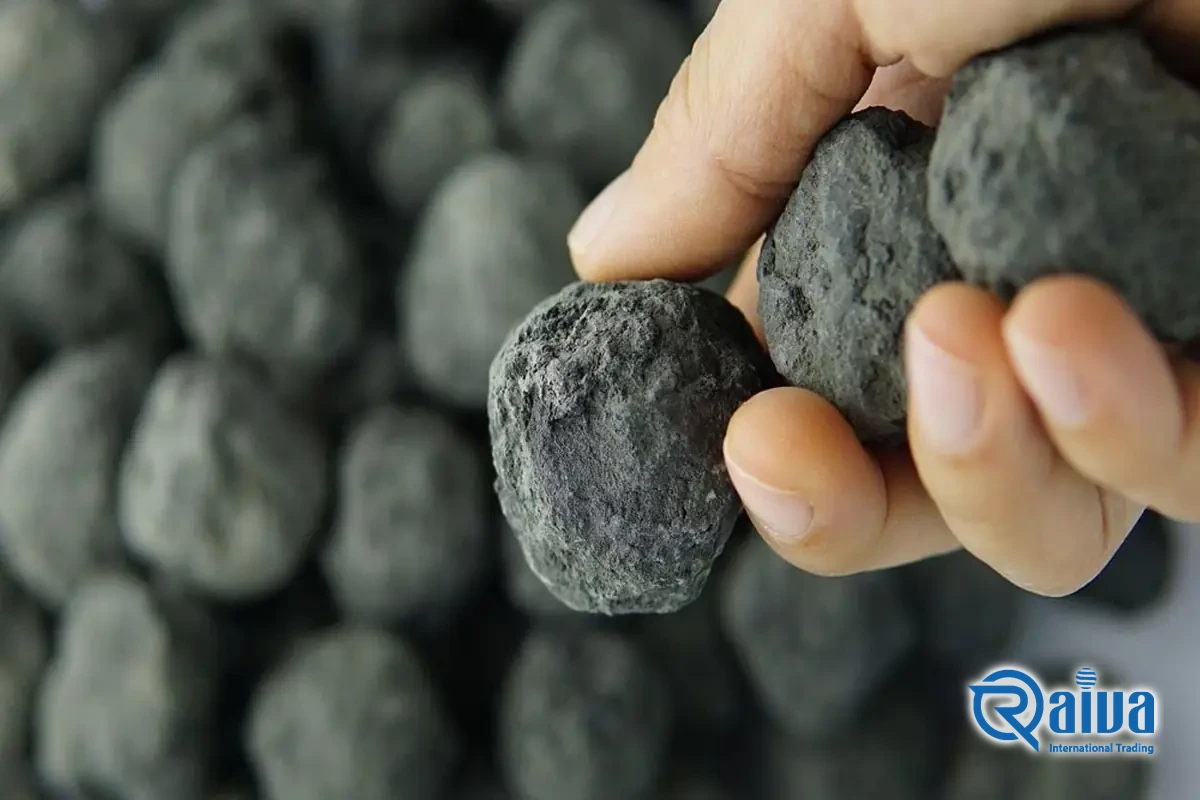
Three clinkers, three cements
Clinker is not an end product: it is bought by whoever does the grinding, and the right chemistry depends on the cement coming out of the mill.
| Parameter | Grey — Type I / II | Type V (sulfate-resisting) | White |
|---|---|---|---|
| CaO | 63–67% | 63–66% | 66–69% |
| SiO₂ | 20–23% | 21–24% | 22–24% |
| Al₂O₃ | 4.5–6.5% | 3–4.5% | 3.5–5% |
| Fe₂O₃ | 2.5–4.5% | 4–5% | max 0.35–0.4% |
| MgO | max 5–6% | max 5% | max 1–2% |
| Free CaO | max 1.5% | max 1% | — |
| Defining limit | LSF 92–98 | C₃A max 5% | Whiteness min 85–92% |
These are typical production ranges for the kiln lines we ship from, not a single certificate: clinker chemistry moves within a band from run to run. SO₃ figures apply to raw clinker before gypsum is interground. Each vessel ships against a batch mill certificate with the actual oxide analysis.
Reading a clinker before you buy it
A grinding plant reads a clinker through its four Bogue phases. C₃S carries early strength, C₂S late strength, and C₃A is the phase sulfate attack feeds on.
| Phase | Grey — Type I / II | Type V (SR) | White |
|---|---|---|---|
| C₃S (alite) | 50–60% | 45–55% | 65–75% |
| C₂S (belite) | 15–22% | 20–28% | 10–20% |
| C₃A (aluminate) | 6–10% | max 5% | — |
| C₄AF (ferrite) | 8–12% | 10–13% | < 0.5% |
- Lime saturation factor (LSF 92–98) shows how much of the lime the silica, alumina and iron can actually combine with. Run it too high and free lime is left over.
- Silica modulus (SM 2.3–2.7) sets how much liquid phase forms in the kiln, which governed how the clinker burnt.
- Alumina modulus (AM 1.3–1.7) sets the split between C₃A and C₄AF, which is why the Type V grade runs a lower one.
- Free lime (max 1–1.5%) hydrates slowly after the concrete has set and expands as it does. A low figure says the whole burn was sound, not just one number.
- Type II cement is ground from grey clinker held to a maximum of 8% C₃A, rather than the full grey band.
Routes to Iraq, Afghanistan and Central Asia
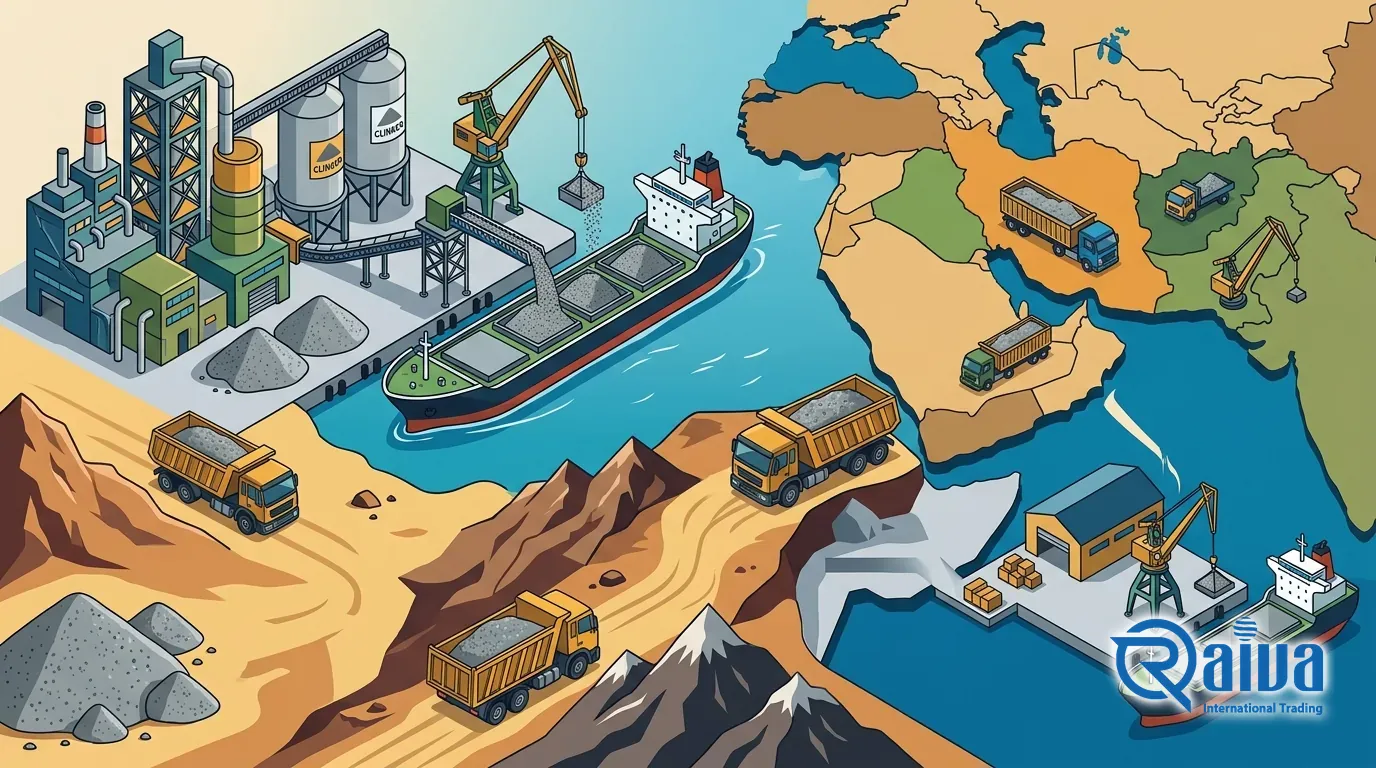
Clinker normally moves by bulk vessel, but most of these markets are reached over land:
- Iraq: overland across the land border by truck, or by sea to Iraqi ports from Bandar Imam Khomeini.
- Afghanistan and the Central Asian republics: landlocked, so overland by truck and rail through Iran's land borders on DAP or FCA terms.
- GCC and South Asia: bulk vessel FOB, CFR or CIF from Bandar Abbas or Bandar Imam Khomeini.
| Item | Terms |
|---|---|
| Minimum order | 500 MT for a bulk vessel; 1 × 20 ft container (approx. 25 MT) in jumbo bags for trial quantities |
| Packaging | Bulk as standard; 1–1.5 MT woven jumbo bags for containers, moisture-barrier liner on request |
| Lead time | 7–14 days for standard grades after order confirmation |
| Certification | Batch mill certificate per shipment: full oxide analysis, calculated Bogue phases and free lime; SGS or Bureau Veritas at the buyer's cost |
| HS code (6-digit) | 2523.10 (cement clinker) — national subheadings vary |
Clinker tolerates the journey far better than ground cement, but it is not inert: long exposure pre-hydrates the alite surface and slakes the free lime, and both cost strength once the material is ground. Keep it covered, off wet ground, and grind it in rotation.
Qualifying a clinker for your mill
- Tell us the cement you make — Type I, II, V, a blended cement or white — and we match the clinker line to it.
- Run a trial container of about 25 MT through your own mill before committing a cargo.
- Check the mill certificate on every lot against the band you contracted, especially C₃A for Type II and V and free lime for soundness.
- Ask for a tighter band if your process needs one; custom production is quoted against your target chemistry.